

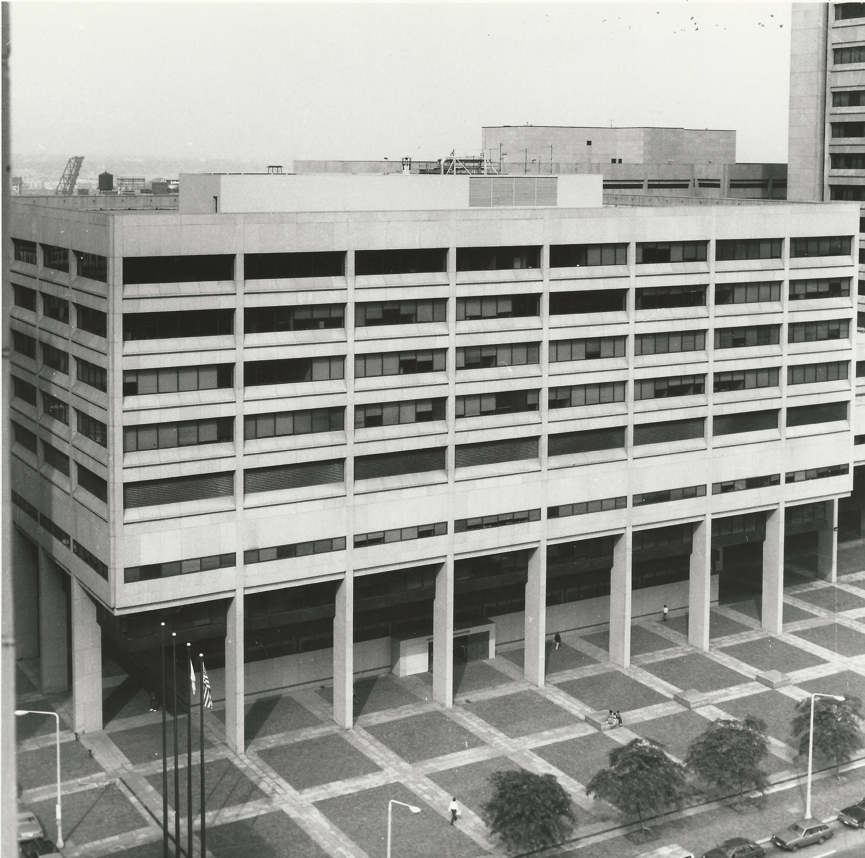
When the Justice Center complex opened in 1976, it represented the culmination of over a decade of careful planning and political wrangling to “provide humane, secure and efficient justice.” The Justice Center “brings together three separate facilities in a single unified complex” – the twenty-four story Courts Tower, the County Corrections center, the County Sheriff’s headquarters and the 9 story Cleveland Police Headquarters.
The need for improved, efficient facilities for Cleveland justice organizations had been discussed at least since the early 1960s. By 1968, local government officials pushed for a cooperative venture that would house Cuyahoga County and Cleveland courts, a correctional facility and the Cleveland police. After a bond issue to fund the new structures failed, the community formed the Criminal Justice Coordinating Council, which worked with other civic, professional and political organizations to plan and fund the center.

The goal was to “streamline all phases of law enforcement and make it possible to handle all legal matters, civil and criminal, on a modern basis.” However, political infighting, logistics and money issues plagued the planning process.
The Cleveland Police Department had concerns around traffic control, safety from potential bombing threats, and logistics as reason to find a different location for it’s new headquarters. However, in July 1970, the Criminal Justice Coordinating Council announced that a five acre site in downtown Cleveland, bounded by Lakeside, Ontario, West 3rd and St. Clair, was chosen for the new center, which was to include a new police headquarters, municipal and county courts, county sheriff headquarters and a corrections center.
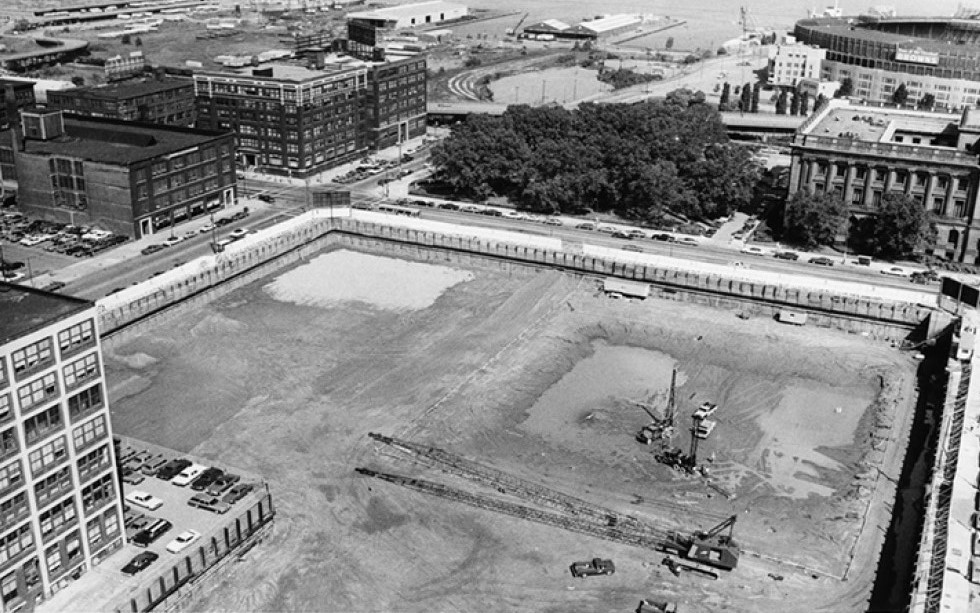
Source: Cleveland State University, Michael Schwartz Library, Special Collections.
After the successful passage of a bond issue to fund the courts and correction center and the City’s separate financial commitment to fund the police headquarters, planning and construction for the new facilities began. Despite ongoing political fighting between the county and city governments, as well as escalating construction costs, the new complex opened in 1976.
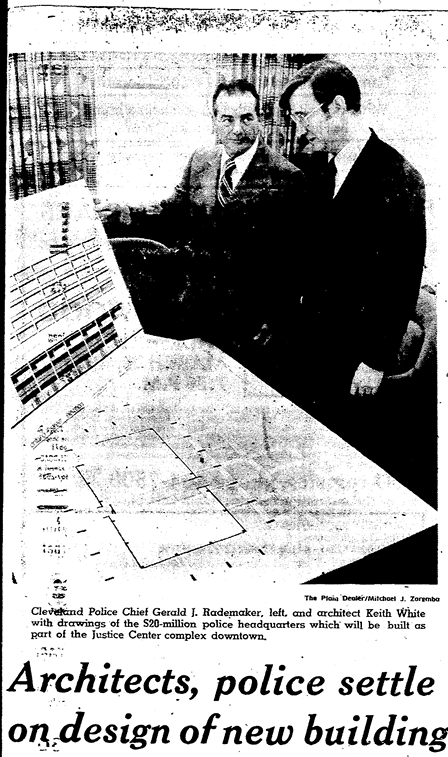
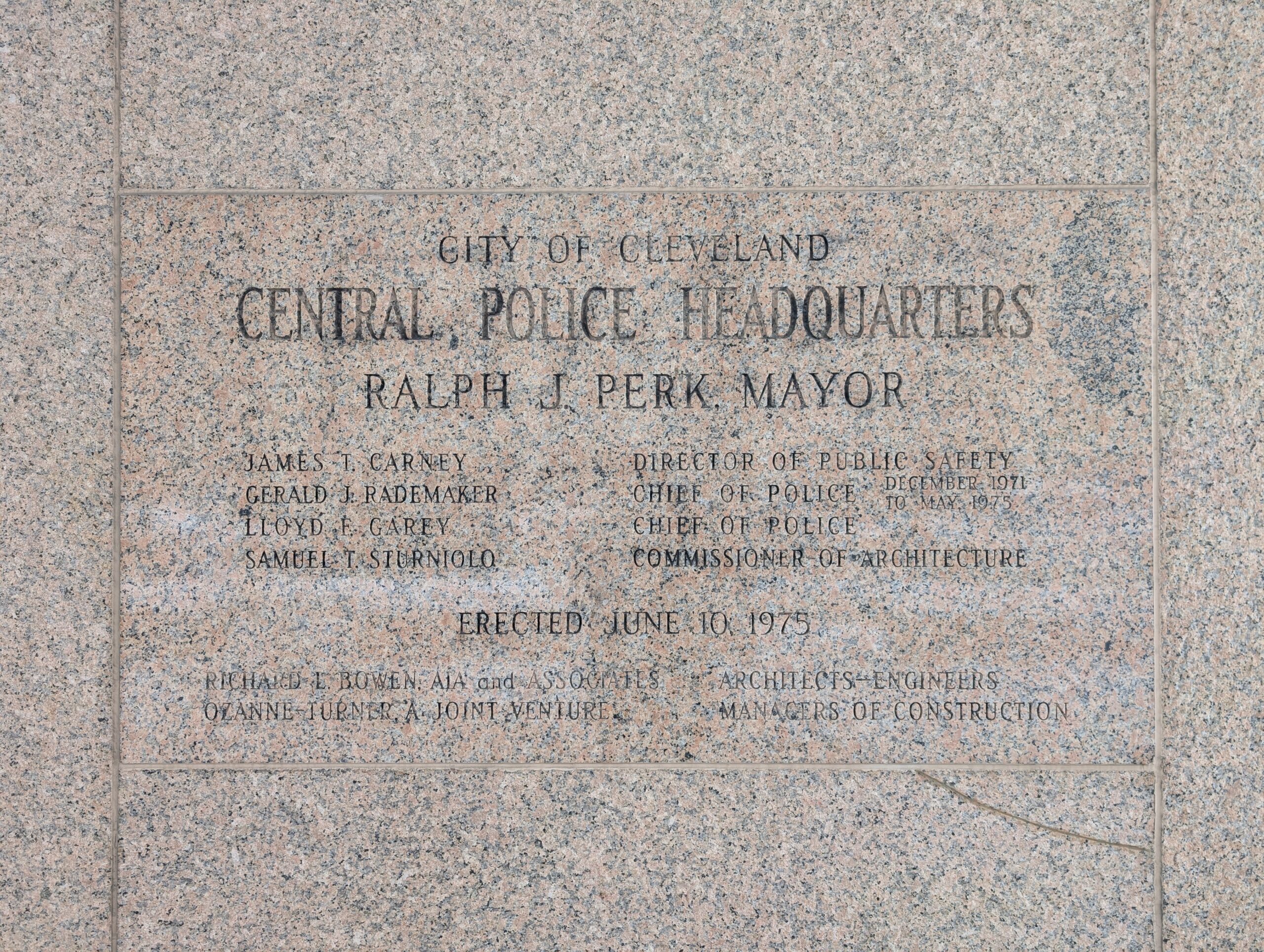
In 1973, the City hired the Richard L. Bowen architectural firm to design the new Cleveland Police headquarters, which was estimated to cost $20 million. By spring 1974, the architects and police leadership agreed on a design for the building, “which will bring offices for nearly all police units into the same building for the first time in decades,” according to the Plain Dealer. The new headquarters would be significantly larger than the third Central Police Station at 2001 Payne, allowing for future growth. “We tried to foresee future needs,” explained Chief Rademaker. “It is going to be our police headquarters for fifty years.”

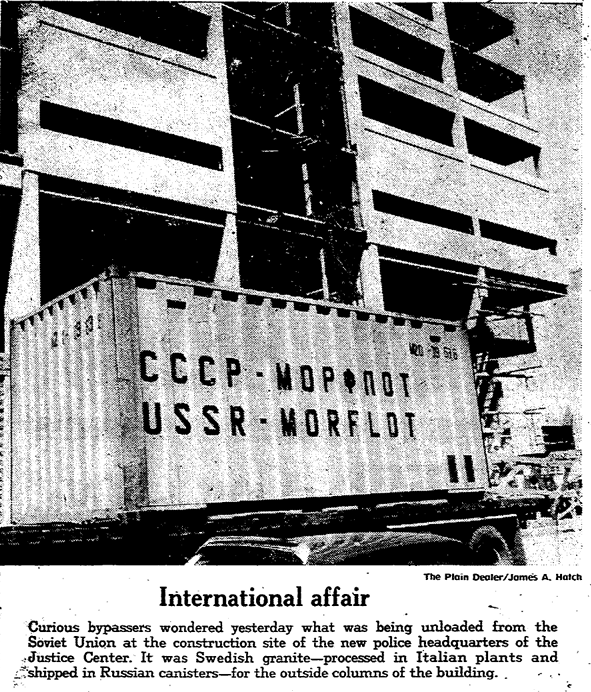
Work on the new headquarters progressed quickly. After a cornerstone ceremony in July, 1975 materials for interior and exterior were brought in. The city contracted with Whitshafters to provide $675,000 worth of steel officer furniture. And the Cleveland Plain Dealer noted that “curious bypassers wondered yesterday what was being unloaded from the Soviet Union at the construction site of the new police headquarters of the Justice Center. It was Swedish granite – processed in Italian plants and shipped in Russian canisters – for the outside columns of the building.”
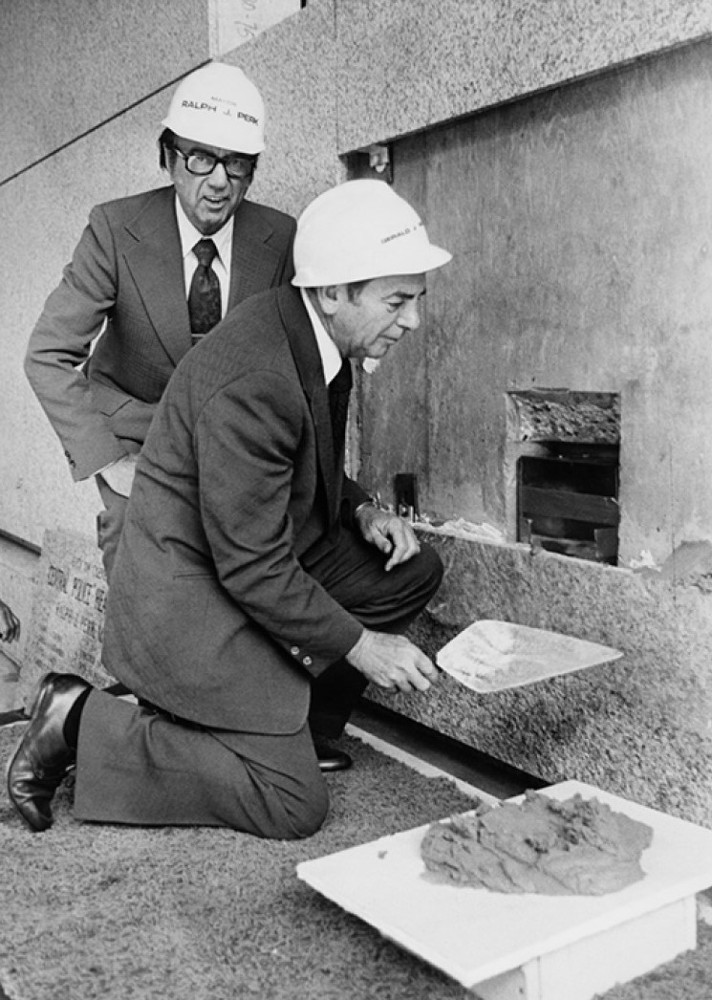
(Photo courtesy of the Cleveland State University, Michael Schwartz Library, Special Collections}
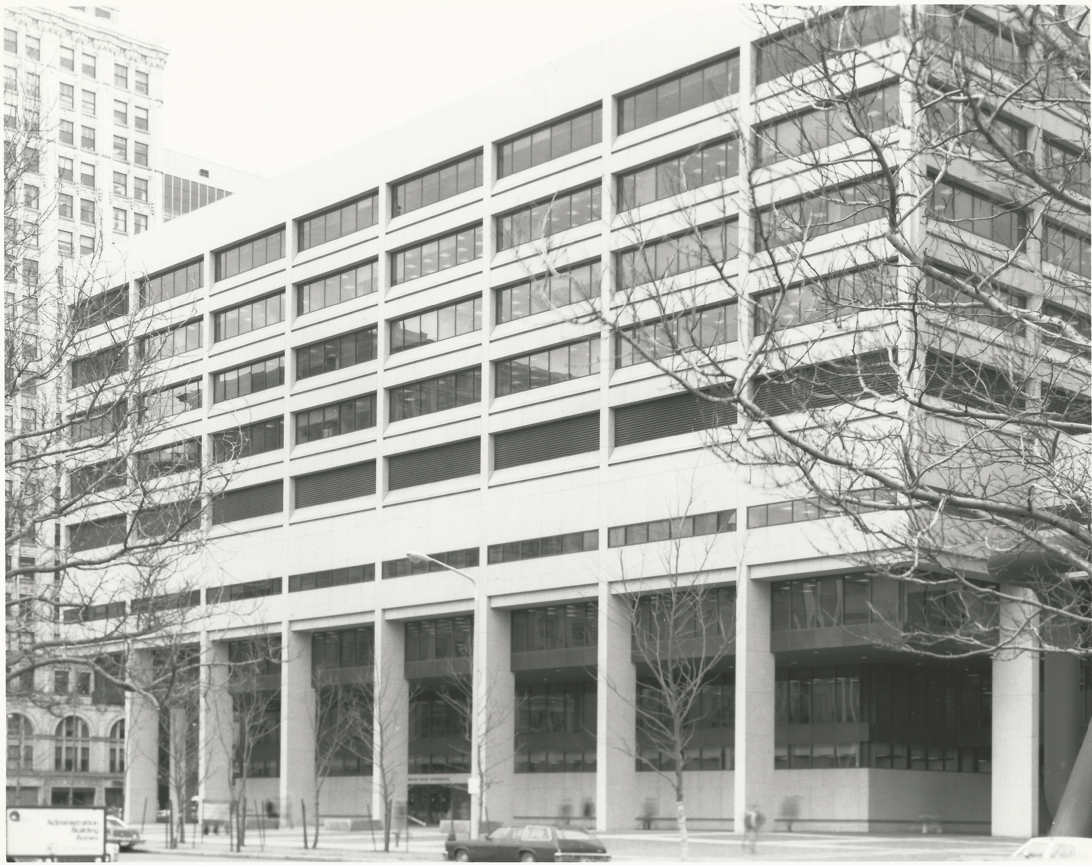
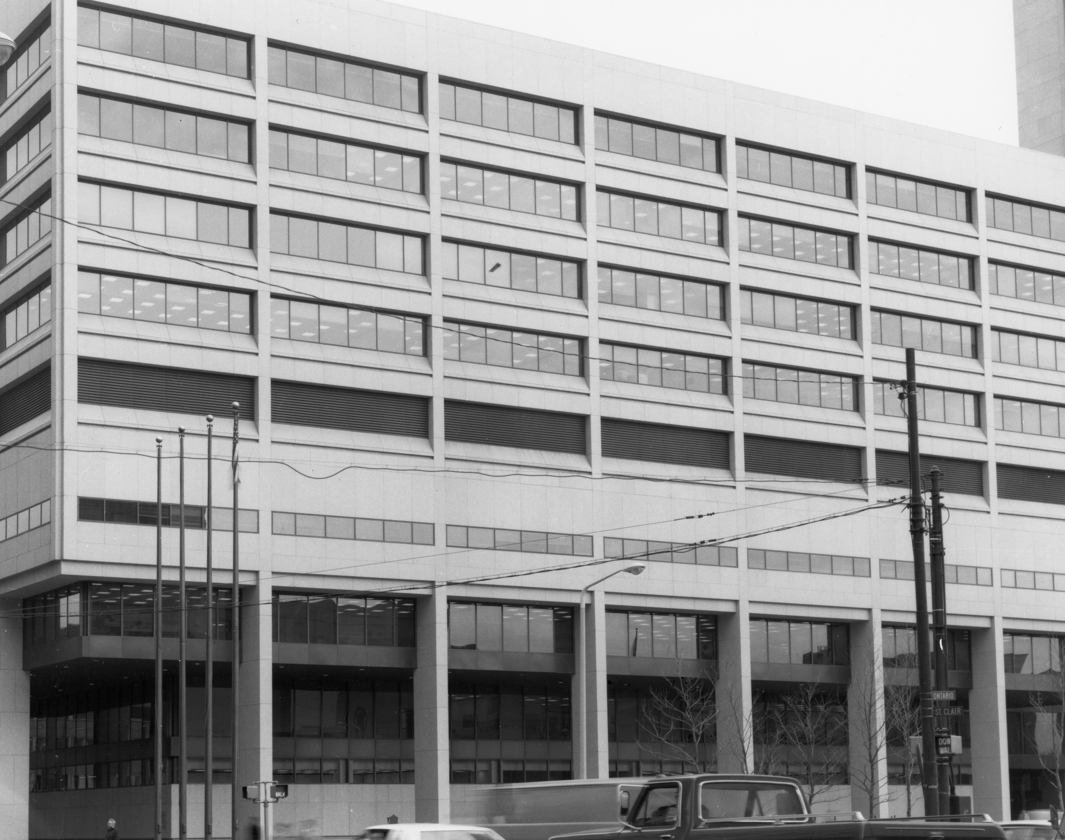
The Cleveland Police Headquarters was the first of the Justice Center buildings to be completed. It officially opened on Friday, June 11, 1976 with a ribbon cutting and open house. Casimer Prorok, superintendent of police buildings, stated that “The building is designed to utilize all possible space. There are no fancy chandeliers or stairwells.” The nine story granite and glass structure included moveable wall panels throughout, so that a small office could be reconfigured into a larger space in just a few hours.
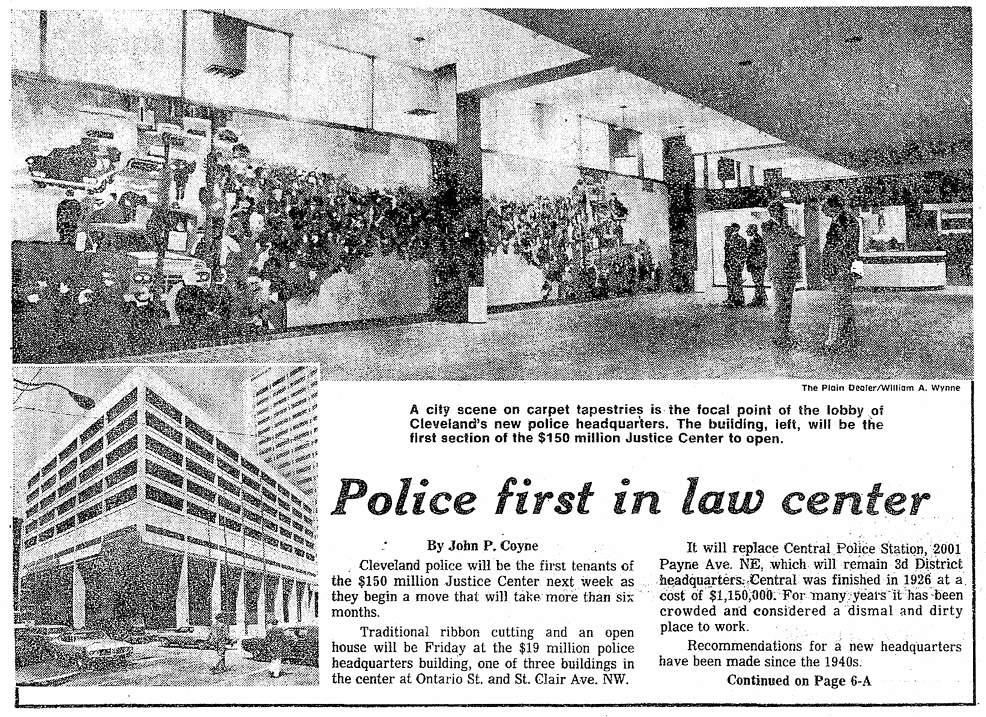

The architects hoped the building would serves as beacon for the community, both figuratively and literally, so they designed the lighting to stay on permanently (there were no light switches installed). Closed-circuit television cameras monitored the corridors throughout the building, with staff watching closely from an office near the public entrance at 1300 Ontario.

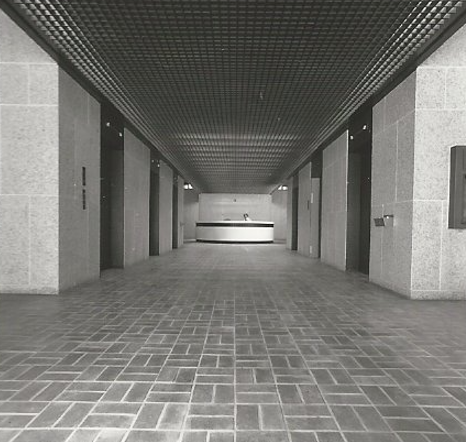
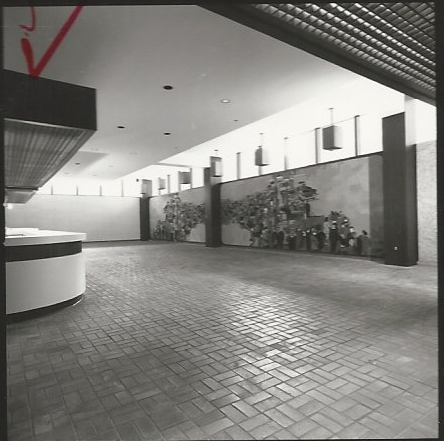
A highlight for general visitors are the four 9 x 27 foot carpet adorning the walls of the first floor lobby. Designed by Bowen & Associates and manufactured in Costa Rica, the murals helped to soften the large lobby space. Jud Kline exectuted the design and calligraphy (drawing) and Dick Bobby provided the coloration. Kline was inspired by the central role police serve in a community. His design features a policeman standing at a busy intersection, providing a steadying center for the swirl of human activity.

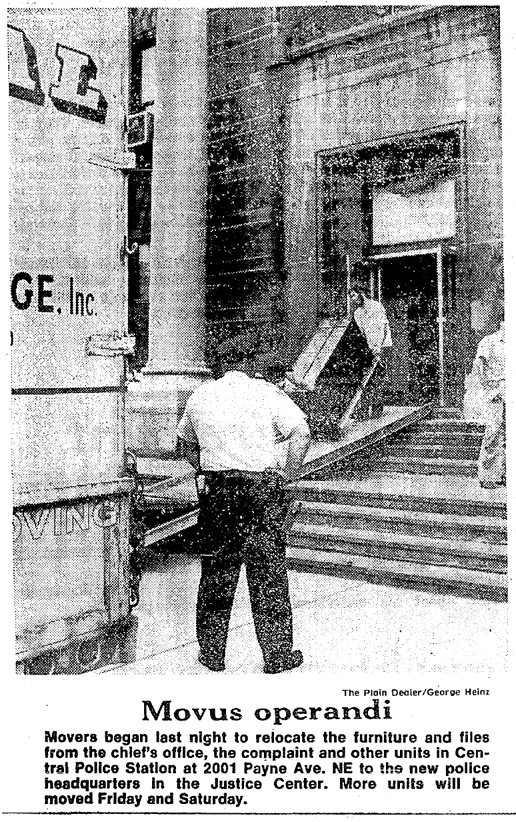
The move from the Central Police Station to the new headquarters at the Justice Center took over a year, with the records and furniture from the Chief’s office relocated first. Transferring the property room and the nearly 20 million records, dating back to the 19th century, proved difficult, particularly since some of those records and evidence would be needed right away. One officer helping with the move remarked, “At least it happens only once every fifty years.”
The Tow Unit discovered another problem with the underground parking garage. Unfortunately, the tow trucks would not fit down the ramp. After modifications to two tow trucks, which included removing the top cab lights and lowering the boom on the back, the trucks could “maneuver around the short turns, narrow support pillars and low ceilings” to remove disabled vehicles inside the garage.
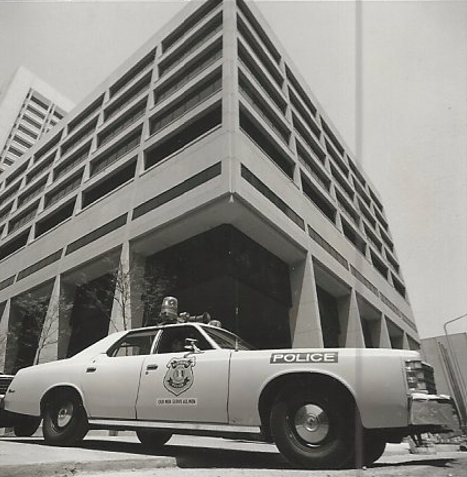

Visitors to the newly opened Cleveland Police Headquarters at 1300 Ontario found an modern, efficient facility that housed the majority of the police units and personnel. The building was designed to provide workspace for 1,035 people, about half of the police workforce.
In addition to the lovely murals, visitors to the first floor of the headquarters found the Vehicle Impound, Clerks’ Office (Traffic Citations & Parking Tickets), Building Security, Personnel Unit, Public Relations Unit, Media Room (WGAR, TV Stations, Newspapers), as well as access to the County Court building.

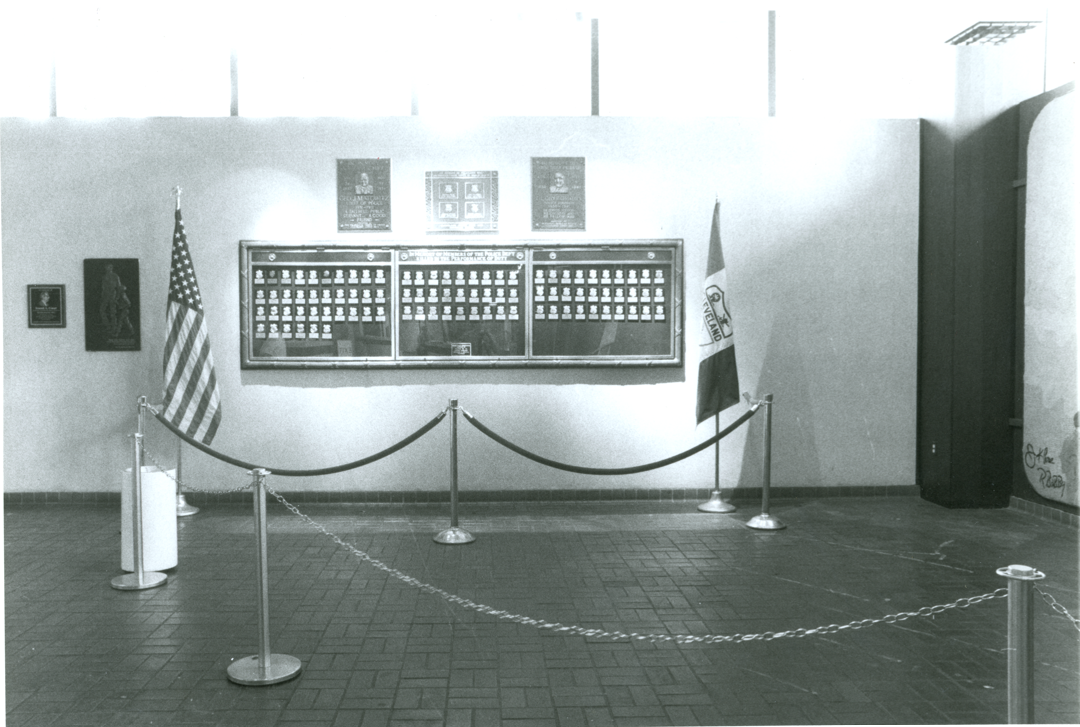
The second floor included the Tactical Unit, Traffic Bureau, Narcotic Unit, and Lockers. The third floor housed the Criminal Record Room, Report Center, Accident Records, Warrant & Suspect Unit, Court Sergeant, Lockers, access to the County Court building.

On the fourth floor was the Medical Unit, Credit Union, Headquarters Intelligence, Property Unit, Lockers, Coffee Shop run by the Society for the Blind and access to the County Court Building.
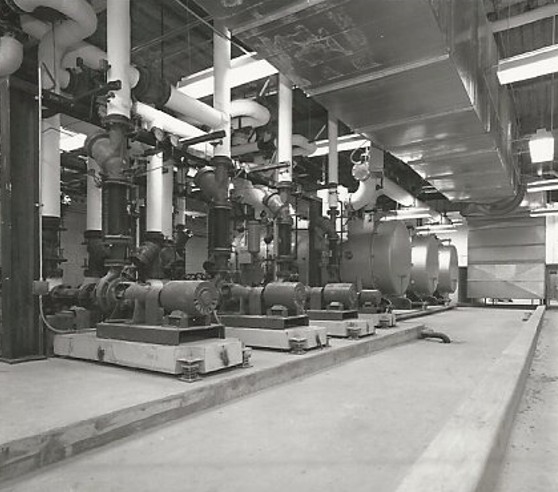
The fifth floor included all of the heating, cooling and mechanicals. Later, a gymnasium was added to this level.
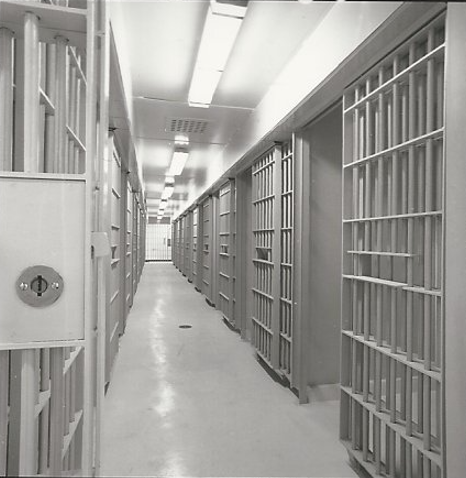
The sixth floor included General Duty Detectives, Homicide, Robbery, Burglary, Juvenile, Arson (Fire &CPD), Pawn Records, Statement Unit, City Jail with secure access to the County Jail. Superintendent Prorok noted that, “when prisoners are brought to the new headquarters, they will be driven to an underground garage and taken by special elevator to the sixth floor detention area with cells for forty men and ten women. Prisoners can be transferred to the county jail through a fifth floor walkway.“
The seventh floor included the Police Academy, BCI Intelligence Unit, Scientific Investigation Unit (SIU), Crime Scene Unit, Felony Record File Section, Fingerprint Section, Forensic Laboratory and Photo Laboratory. At the time of it’s opening, it was “one of the most modern and best equipped labs in the country,” said superintendent Prorok.


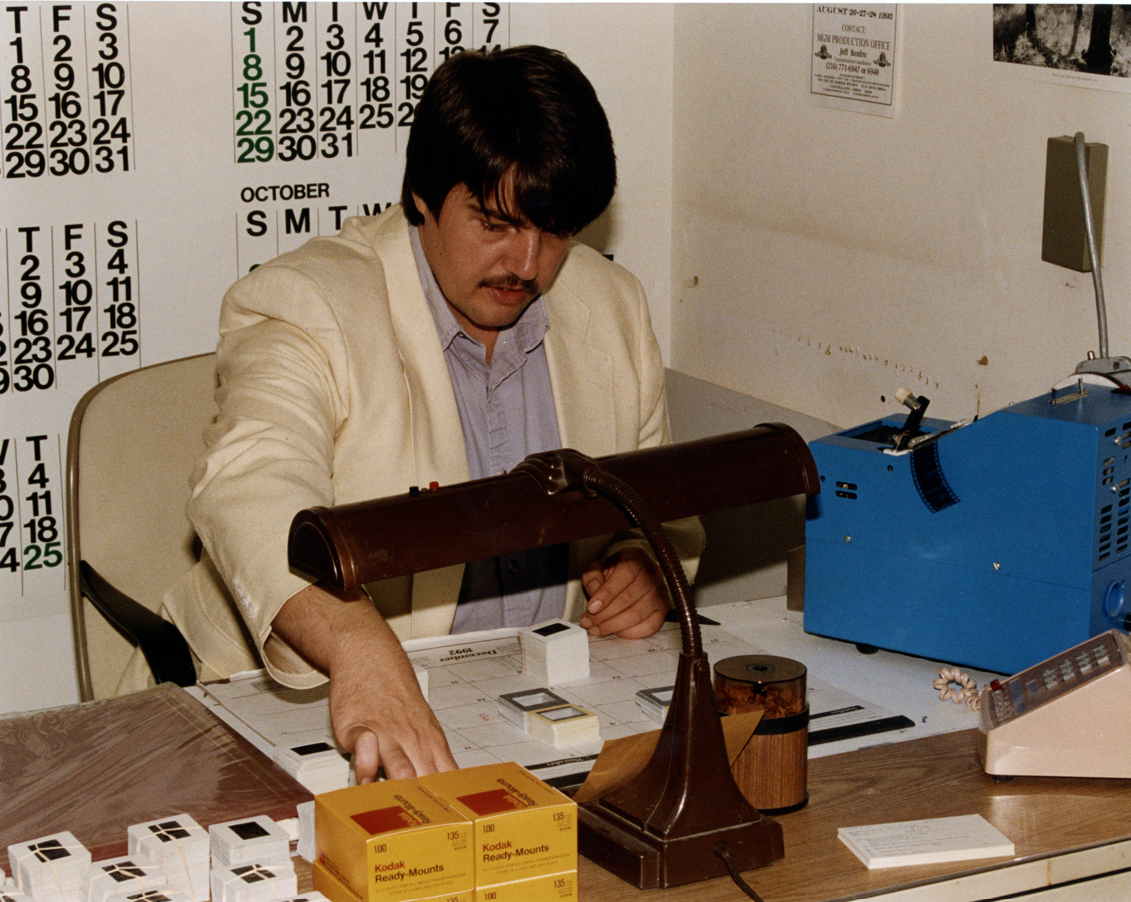


Dee Hemphill examining criminal records, 1990s

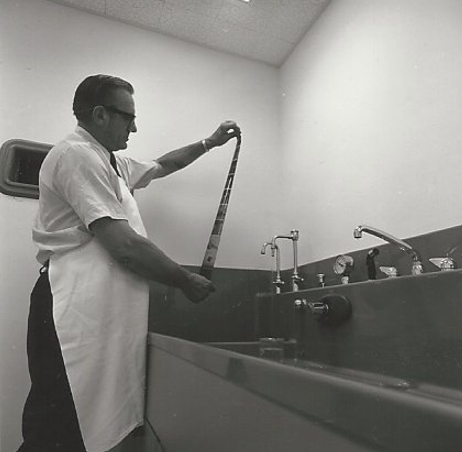
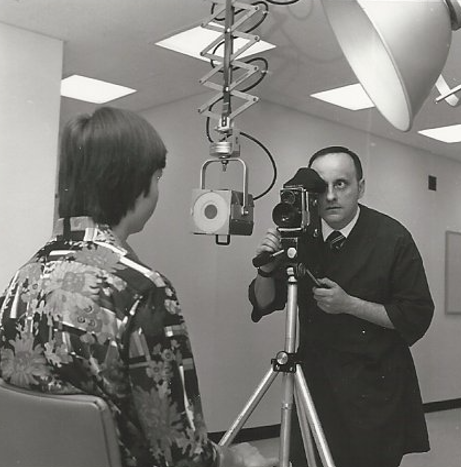
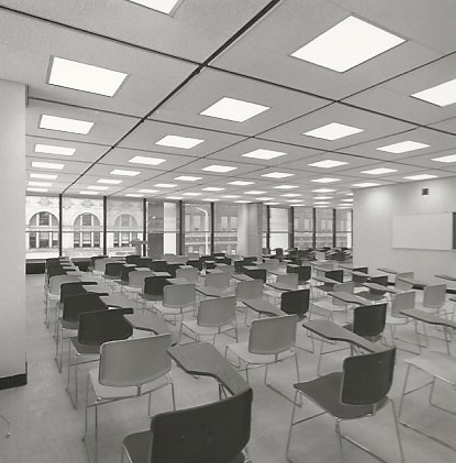

On the 8th floor was the Division of Administrative Operations, Human Resources, Policy & Procedure Unit, Special Investigations Unit, and vacant Space for storage (later used as a running track)
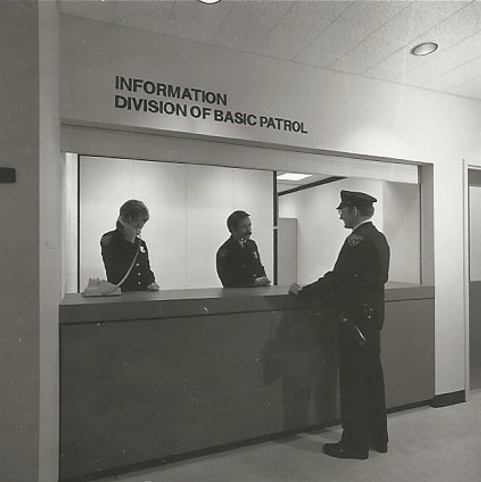
The 9th floor included the Chief’s Office, Division of Basic Patrol, Dispatch Center, and Archives. The Chief’s office was originally designed for the northeast side of the building with a view of the lake, but after concerns were raised over the easy view into the office from a nearby building, the office was moved to the northwest side.

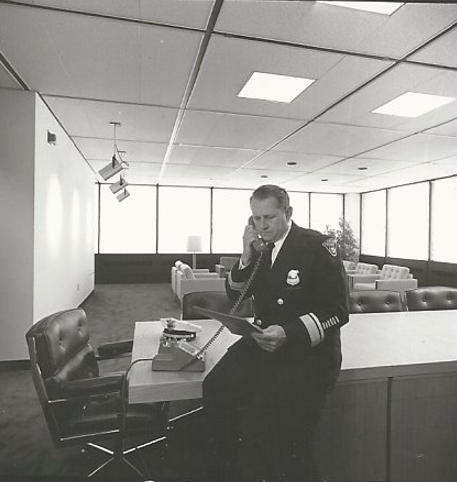
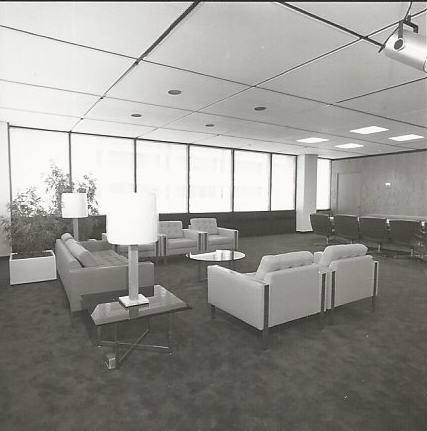
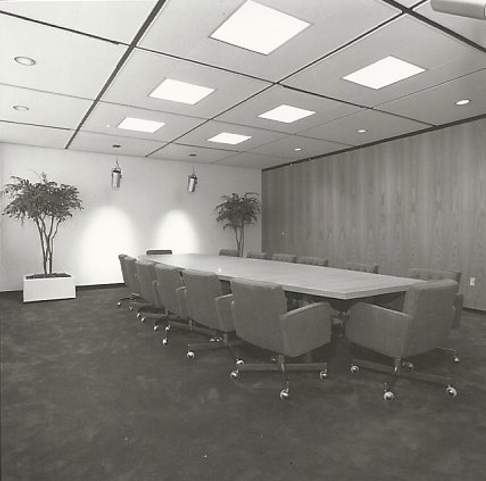

On September 14, 1976, over 12,000 people attended the open house for the newly completed Justice Center complex. The largest government construction project to date, the complex included the Cleveland Police headquarters, a 24 story courts tour for city and county courts, the county sheriff headquarters, the corrections center, and a galleria, which connected the three main spaces. The unified complex provided “cooperation and efficiency in the handling of civil and criminal cases” for the community.


The Police Wives United club gave guided tours of the Cleveland Police Headquarters during the Justice Center open house, showcasing the beautiful murals, a plaque honoring Cleveland police and other areas.

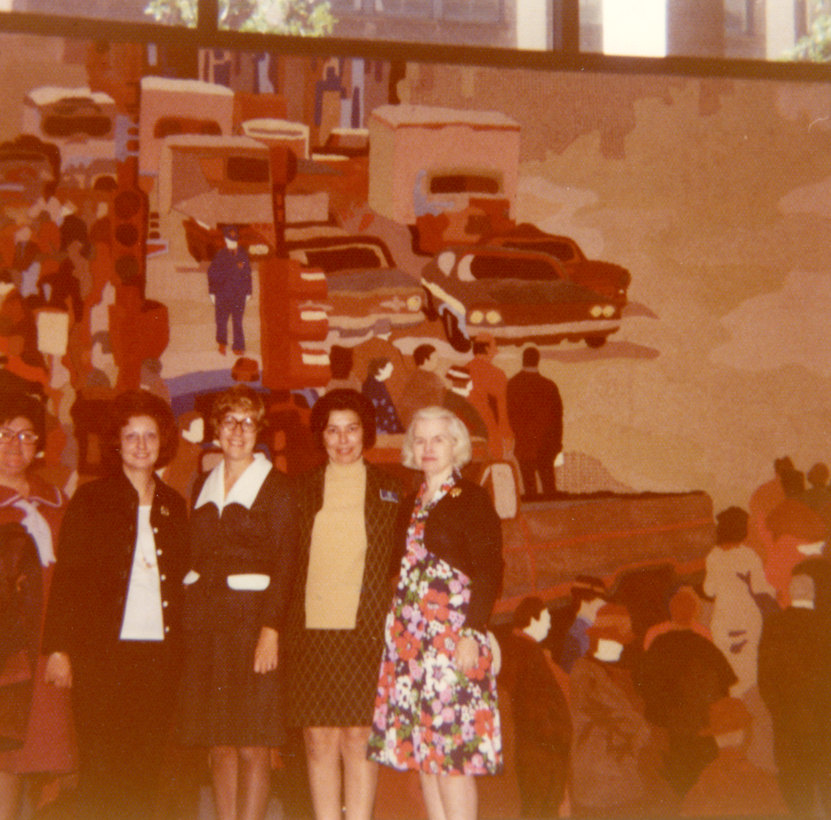



(Photo courtesy of the Cleveland State University, Michael Schwartz Library, Special Collections}
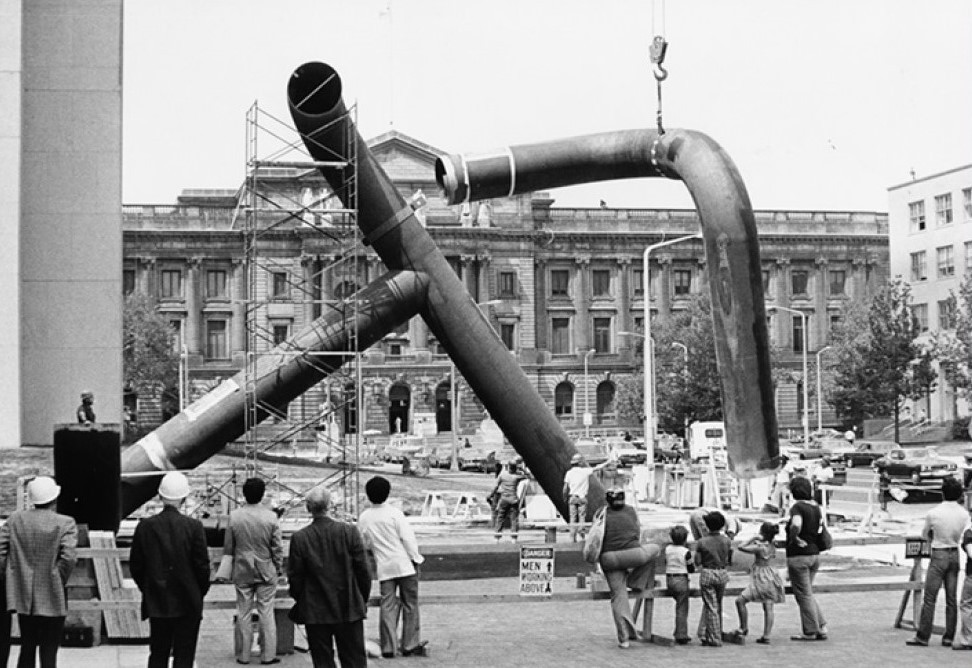
The Art Advisory Committee for the Cuyahoga County Justice Center, a citizen’s committee chaired by Cleveland Museum of Art Director Dr. Sherman E. Lee, commissioned public art for the Justice Center complex. The most notable piece, titled Portal, was designed by Japanese American sculptor Isamu Noguchi. The artwork is “intended to convey the sense of an opening, a symbol of the confrontation of social laws, justice and man and a sign of hope for a new beginning and better life for those who enter in a time of crisis.” Fabricated from black painted steel tubing by local steel company Patterson Leitch, the sculpture was purchased through a grant from the George Gund Foundation.
(Photo courtesy of the Cleveland State University, Michael Schwartz Library, Special Collections}

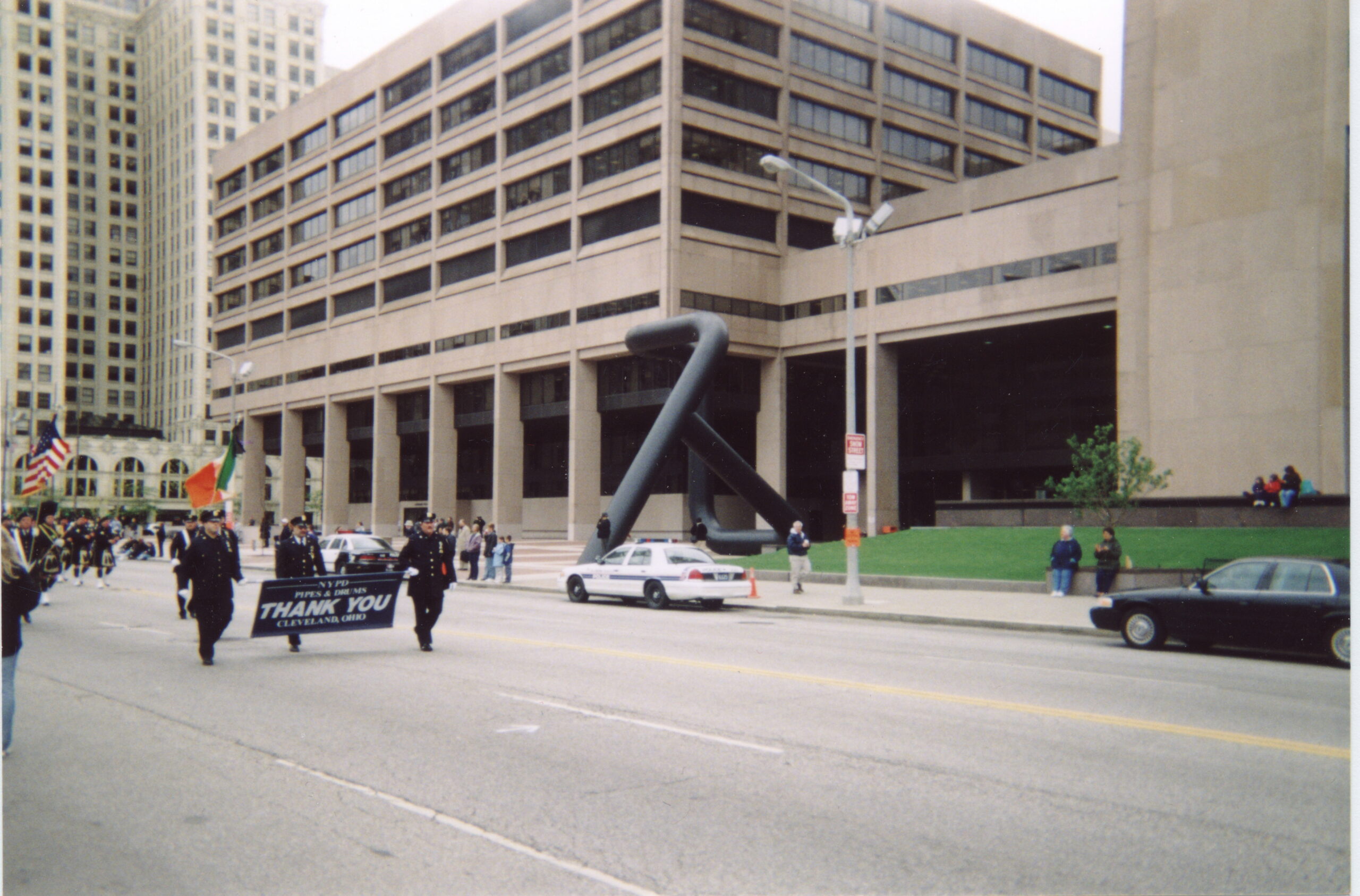


Changes to the Justice Center Complex have continued. In 1989, the county contracted with Turner Construction to build an annex to the corrections center on the southwest corner, on the site of the former Mott Building. The annex was completed in 1994. Significantly, the City of Cleveland of Cleveland sold the police headquarters building to Cuyahoga County in 2018. The Cleveland Police are projected to move into it’s new headquarters at the former Artcraft Building on Superior Avenue in July 2026.
Article written by Mazie Adams, Executive Director of the Cleveland Police Historical Society & Museum, 2025